

The Faculty

open arrow

Ben Cowling

Ben Cowling

Professor Benjamin Cowling joined the School of Public Health (SPH) at HKU in 2004. Prior to moving to Hong Kong, he graduated with a PhD in medical statistics at the University of Warwick (UK) in 2003, and spent a year as a postdoc at Imperial College London (UK). Professor Cowling has been the Head of the Division of Epidemiology and Biostatistics since 2013. He is responsible for teaching the introductory module in epidemiology on the MPH curriculum, and is the chairman of the Departmental Research Postgraduate Committee. Professor Cowling is a co-director of the WHO Collaborating Centre for Infectious Disease Epidemiology and Control at HKU SPH.

Professor Cowling’s primary research focus is in infectious disease epidemiology. In recent years he has designed and implemented large field studies of influenza transmission in the community and the effectiveness and impact of control measures. His latest research has focused on the modes of respiratory virus transmission, influenza vaccination effectiveness, and immunity to infections at the individual and population level. He has strong links with China CDC, and the NIGMS-funded Harvard Center for Communicable Disease Dynamics.

Professor Cowling is a fellow of the Royal Statistical Society and a Fellow of the UK Faculty of Public Health. He is the Editor-in-Chief of Influenza and Other Respiratory Viruses, and an Associate Editor of Emerging Infectious Diseases.

He has more than 750 publications listed in Scopus, including 92 articles with 92 or more citations (H-index of 92). Professor Cowling has received numerous awards including HKU Outstanding Young Researcher Award (2011), Croucher Senior Research Fellowship (2015), HKU Outstanding Researcher Award (2017), and RGC Senior Research Fellowship (2020). He was awarded an MBE in Queen Elizabeth II’s 2021 birthday honours.

open arrow

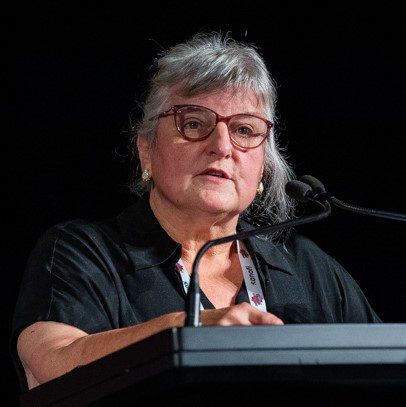
Rebecca Cox

Rebecca Cox

Rebecca Cox is a long-standing, very active member of the ISRV Council. In recent years, she has been part of the organising committee for OPTIONS XI (2022) and led delivery of the ISRV Mini-School at that meeting. She was a key driver of the committee that organised the ISRV School in Vellore (Nov 2022), a collaboration with the Christian Medical College, and part of the international faculty. In March of this year, she was a lead organiser of the Correlates of Protection meeting in Seattle (March 2023). In addition, she is a Senior Editor of the ISRV Journal (IORV).

Rebecca Cox is Professor of Medical Virology and Head of the Influenza Centre at the University of Bergen, Norway. Rebecca completed her Ph.D. in 1995 at the London Hospital Medical College, University of London, UK with Professor John Oxford on the immune response to Influenza vaccines in man. She then had post doc. positions at Guys Hospital, UK and at the University of Bergen under Professor Lars Haaheim. In 2000 she was appointed lecturer in Medical Virology, University of Bergen continued from 2001 as a Research Scientist. In 2008 she was appointed head of the Influenza Centre with a current staff of 7 and from 2009 Professor in Medical Virology. Her research has focused on preclinical and clinical research into seasonal and pandemic influenza vaccines and is currently funded by the European Union, Norwegian Research Council and the Department of Health. The main areas of research are preclinical research and development of novel adjuvants and influenza vaccines, clinical trials of new influenza vaccines from phase I to IV with focus on detailed characterisation of the immune response.

Rebecca has over 70 peer-reviewed publications in journals or book chapters Rebecca is a member of The Norwegian Influenza Pandemic committee, which provides advice to the Ministry of Health and Care Services. She has served as an expert reviewer for investigator-initiated trials for the European Union and for influenza vaccines to the vaccine industry. She has been invited to the World Health Organization meetings on pandemic vaccines and Broad Spectrum and Long-lasting Immune Responses and served as an advisor to the European Medicines Agency on Scientific Aspects of Serological assays.

open arrow

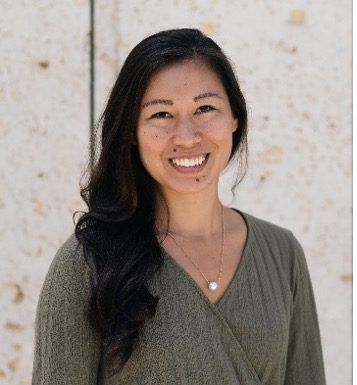
Julianna Han

Julianna Han

Dr. Julianna Han is a structural virologist investigating influenza virus-host interactions using cryo-electron microscopy paired with molecular virology and computational approaches. She leads the influenza research group in Dr. Andrew Ward’s laboratory at The Scripps Research Institute. Her research spans the viral life cycle to antibody-mediated immunity: during her PhD in Dr. Balaji Manicassamy’s laboratory at the University of Chicago, she integrated genome-wide CRISPR screening with mechanistic viral life cycle assays to investigate host factors crucial for influenza infection and probe pan-viral cell-instrinsic immunity. At Scripps Research, her team focuses on two major research areas. First, they structurally map serum polyclonal and monoclonal antibody-epitope interactions from human responses to influenza infection and vaccination, compare these responses across species, and evaluate the effectiveness of immunofocusing in next-generation vaccine designs. Second, they apply structure-guided protein engineering to develop novel immunogen strategies and antibody therapeutics. Together, these efforts leverage advances in influenza immunology, structural biology, and computational protein design to define the immune landscape against seasonal and zoonotic influenza viruses and develop vaccine and therapeutic strategies to strengthen pandemic preparedness.

open arrow

David Hui

David Hui

Prof. Hui graduated from the University of New South Wales in 1985. He then trained in Respiratory Medicine and Sleep Medicine in Sydney, Australia.

Prof. Hui was heavily involved in the clinical management of patients with SARS at the Prince of Wales Hospital during the major outbreak in 2003. He served as a WHO advisor to review the clinical management of influenza A(H5N1) during the early human outbreak in Vietnam in Feb 2004 and has since been a regular advisor to the WHO on the clinical management of severe acute respiratory infections. He joined urgent WHO missions for investigation of outbreaks of MERS in Riyadh and South Korea in 2013 and 2015 respectively. He contributed to the WHO treatment guidelines including the clinical management of influenza A (H5N1) virus in 2007, clinical management of influenza A (H1N1) pandemic in 2009, and the Middle East Respiratory Syndrome (MERS) and the WHO training workshop in the clinical management of influenza A(H7N9) and COVID-19. He served as an advisor to the HKSAR government on COVID-19 pandemic from Jan 2020 to May 2023 and has been the Chairman of the Scientific Committee on Emerging & Zoonotic Diseases, Centre for Health Protection, since 2019.

Prof. Hui has published over 500 peer-reviewed journal articles and 24 book chapters since joining the CUHK in 1998. He was the top 1% highly cited researcher (cross fields) from 2021 to 2025 assessed by Clarivate, with H index of 91(Web of Science).

open arrow

Ghazi Kayali

Ghazi Kayali

Over the past 15 years, Dr. Kayali research has focused on the epidemiology of avian and zoonotic influenza viruses at the human–animal interface, with particular emphasis on the Middle East and Africa. He has led extensive surveillance in live bird markets, commercial poultry farms, and mixed-species production systems to understand how influenza A viruses emerge, persist, and evolve in these high-risk environments. His group has documented sustained circulation of H9N2 and H5 lineages in poultry and mapped their geographic and temporal dynamics across the region. Dr. Kayali has generated critical evidence on cross-species transmission, including the detection of avian and human influenza subtypes in pigs, and recent confirmation of A(H5N1) clade 2.3.4.4b infections in dairy cattle, sheep, and goats in Egypt. He leads one of the few groups globally conducting cohort studies at the human–animal interface, enabling estimation of influenza incidence and seroprevalence among high-risk occupational groups. Beyond field surveillance, he has contributed to influenza vaccine research. As a technical advisor and consultant for the World Health Organization, Dr. Kayali advise on zoonotic disease preparedness, pandemic response, and the implementation of the International Health Regulations. Dr. Kayali currently serves as Managing Partner of Human Link DMCC, a member of the NIH-funded Centers of Excellence for Influenza Research and Response (CEIRR). He remains committed to strengthening One Health surveillance, building local laboratory and field capacities, and advancing integrated, multisectoral systems for pandemic influenza preparedness across Africa and the Middle East.

open arrow

Emanuele Montomoli

Emanuele Montomoli

Emanuele Montomoli was born on 26 September 1968 in Siena, Italy. He graduated in 1988 from the Technical School in Siena as an expert industrial chemist. He graduated in 1997 in Human Biology discussing a thesis entitled “Optimisation of the use of MDCK cell cultures (Madin Darby canine kidney) for the epidemiological control of influenza”. In 2002 he graduated discussing his thesis entitled “Purification of haemagglutinin of the type B influenza virus through isoelectric focalisation”. In 1994 he was awarded a position assistant at the Hygiene Institute of the University of Siena. On 2 July 2002 he participated in a competition in the Procedure of Comparative Evaluation for a single posting as Associated University Professor, at the University of Turin, for the scientific sector MED/42 (General and Applied Hygiene). On 28 October 2002 he was appointed by the Faculty of Medicine and Surgery of the University of Siena.

During his studies he conducted research on epidemiological and microbiological field, particularly during the influenza season when he carries out the epidemiological and virological surveillance of the respiratory viruses circulating in Italy. Since 1994, he has carried out seroepidemiological research in order to evaluate the immune state of the population toward influenza viruses. Since 1995 he has mostly overseen clinical trials of influenza vaccines, in order to evaluate their immunogenicity and reactogenicity. Since 2002 he is the Head of Molecular Epidemiology Research Division at the University of Siena. He is the author of more than thirty articles with a total Impact Factor of 142, as well as numerous abstracts and letters, published in Italian and international scientific journals. In 2011 he was in the Organized Committee of the “Summer School on Influenza” in Italy. He has been a member of ISRV since 2005.

open arrow

Leo Poon

Leo Poon

Professor Poon, a virologist and public health scientist, received his PhD from the Sir William Dunn School of Pathology at the University of Oxford. In 2001, he joined the University of Hong Kong (HKU) as a Research Assistant Professor and is now the Chair Professor in the School of Public Health, also serving as co-director of the HKU-Pasteur Research Pole and co-director of the Hong Kong Jockey Club Global Health Institute (HKJCGHI).

Professor Poon’s research primarily focuses on emerging and re-emerging viruses that threaten human health, including SARS-CoV, SARS-CoV-2, MERS-CoV, and zoonotic influenza viruses. Utilizing the “One Health” concept, he studies viruses at the animal-human interface and has developed molecular tests for various zoonotic viruses. Notably, he contributed to the discovery of the coronavirus responsible for SARS in 2003 and decoded its sequence, leading to the identification of coronaviruses in wildlife, including the first bat coronavirus. During the H1N1 pandemic in 2009, he identified the first reassortant of the pandemic virus in pigs. His work during the COVID-19 pandemic significantly advanced our understanding of SARS-CoV-2 and its public health implications, and he has a strong interest in vaccinology.

Professor Poon has published over 300 peer-reviewed articles and is a founding member of the Hong Kong Young Academy of Sciences. He was awarded a Senior Research Fellowship by the Croucher Foundation in 2017 and has ranked in the top 1% of the world’s most-cited scientists since 2005, with over 45,000 citations and an H-index of 102. In 2023, he received the highly prestigious Louis Pasteur Bicentenary Prize from the Institut Pasteur for his contributions to combating emerging infectious diseases.

Professor Poon serves as an expert for several international organizations, such as WHO, FAO, and WOAH.

open arrow

Sheena Sullivan

Sheena Sullivan

A/Prof Sheena Sullivan is an infectious diseases epidemiologist. She completed her PhD at UCLA in collaboration with the China Centres for Disease Control and Prevention, Beijing. From 2011-2023 she led the epidemiology team at the WHO Collaborating Centre for Reference and Research on Influenza in Melbourne. She is an Adjunct A/Prof with Monash University and the University of Adelaide, collaborating on Australia’s sentinel influenza surveillance. She also consults for the World Health Organization providing advice to member states on the estimation of influenza disease burden, vaccine effectiveness and vaccine impact.

She is a recognised expert on the conduct of observational studies to estimate vaccine effectiveness, especially the test-negative design, and has been invited to speak on the topic at local and international meetings. Her research extends to understanding the mechanisms underlying observations of reduced VE in some groups. She has led or collaborated on small and large sero-epidemiology cohorts to understand the consequences of repeated influenza vaccination, immune imprinting and vaccination in vulnerable groups. She has authored and co-authored over 200 publications in high impact journals such as Lancet Respiratory Medicine, NEJM and NPJ Vaccines and has grants totalling >$6million. She is a council member of the International Society for Respiratory Viruses, Associate Editor for its journal, Influenza and Other Respiratory Viruses, and Associate Editor for the International Journal of Epidemiology

open arrow

Richard Webby

Richard Webby

Richard completed his PhD from the University of Otago, New Zealand, before joining St Jude Children’s Research Hospital, Memphis, US. He is currently a Member of the Department of Host Microbe Interactions at St Jude where he has a research program focused on influenza at the human animal interface. He is the Director of the WHO Collaborating Center for Studies on the Ecology of Influenza in animals and the St Jude Center of Excellence for Influenza Research and Response.

open arrow

Sook San Wong

Sook San Wong

Professor Wong obtained her PhD in molecular virology, working on dengue virus, from the Department of Microbiology and Immunology at the University of Melbourne, Australia. She subsequently completed her postdoctoral training at the St. Jude Children’s Research Hospital in Memphis, TN, which was also the World Health Organization (WHO) Collaborating Center on the study of the ecology of influenza in lower animals.

Her laboratory’s research interest is focused on understanding the immunological and virological determinants of robust antibody responses after respiratory virus infection and vaccination at a population as well as at the individual level. This includes studying the immunological principles that govern antibody recall of rapidly evolving and antigenically-variable viruses using clinical or human cohort samples, or in animal models. This research area is critical to our understanding of respiratory viruses’ vaccine efficacy and pathogenesis and how that affects the population’s susceptibility to these viruses.

Professor Wong is a full member of the American Society of Virology, American Society of Immunology and a council member of the International Society for Influenza and Other Respiratory Viruses.

open arrow

Hui-Ling Yen

Hui-Ling Yen

Professor Hui-Ling Yen received her Ph.D. in Epidemiological Science from The University of Michigan, Ann Arbor followed by her postdoctoral training at St. Jude Children’s Research Hospital, Memphis, TN. Her research interests focus on understanding the mechanisms of influenza transmission among and between different reservoirs, investigating potential virus-host interactions that affect viral pathogenicity and transmission, and examining the molecular determinants that confer antiviral resistance.

A major research focus in her lab has been on transmission mechanisms. The ongoing research projects apply interdisciplinary research tools to study the modes of transmission for influenza and other respiratory viruses under laboratory settings and in the field, including at the animal-human interfaces. Her lab also uses genetic analyses, molecular biology, and phenotypic measurements to study critical molecular determinants and their effect on protein functionality and viral fitness.

Professor Yen is a full member of the American Society of Virology and a committee member of ISRV Antiviral Group. She serves at the Editorial Boards of Antiviral Research and Influenza and Other Respiratory Viruses.

open arrow

Maria Zambon

Maria Zambon

Professor Maria Zambon is the current Head of Respiratory Viruses and Director of the National Influenza Centre at the UK Health Security Agency’s (UKHSA) National Reference Laboratory in Colindale, London, UK. With 40 years of experience as a medically qualified influenza virologist – of which three decades have been spent at UKHSA and its predecessor organisations – she has played a crucial role in the surveillance and response to seasonal influenza as well as new and emerging respiratory viruses, both nationally and internationally.

She has been a member of several scientific working groups and advisory committees for UK Government including SAGE (Scientific Advisory Group for Emergencies), NERVTAG (New and Emerging Respiratory Virus Threats Advisory Group), and JCVI (Joint Committee on Vaccination and Immunisation) over many years. Internationally, she is a close collaborator with the World Health Organisation (WHO), representing the UK at global meetings on respiratory virology and providing input into their global influenza surveillance system GISRS.

Her main research interests include the diagnosis of viral infections in humans, especially RNA viruses, the pathogenicity of influenza, and the development of new vaccines for respiratory viruses, particularly influenza. Her PhD on the mechanism of action of amantadine led directly to the identification of a novel class of viral proteins and viral ion channels (influenza M2 protein).