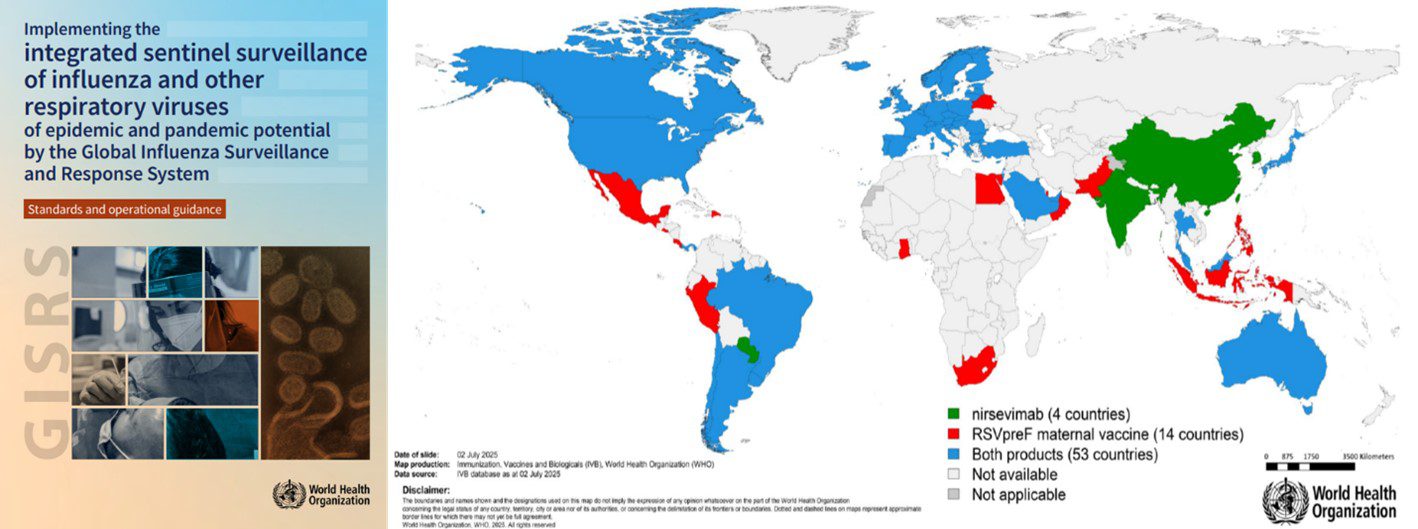

The presence of a strong development pipeline of RSV interventions, which had a strong probability of achieving licensure, prompted the WHO to initiate a global surveillance network for RSV in 2016
This began by piloting detection and typing strategies in 2 countries in every WHO region (14 countries). Between 2016 and 2019, surveillance technologies were gradually implemented in the pilot countries. From 2019 to 2024, the number of participating countries expanded to 25 and a genomic surveillance program was initiated to provide a baseline for understanding viral diversity, prior to the introduction of evolutionary selective pressure from vaccines and mAbs. 2024 represented a landmark with the licensure of RSV vaccines and long lasting mAbs with the gradual implementation of these interventions into national vaccination strategies.
In September 2025, the WHO launched phase III of global RSV surveillance, focusing on integrated sentinel surveillance and enhancing surveillance in low- and middle-income countries (LMICs) to support the use of RSV interventions where they are needed most.