“The School helped me to understand many concepts and techniques that I was unaware of. All the classes were excellent and well understood.” – Early-Career Researcher

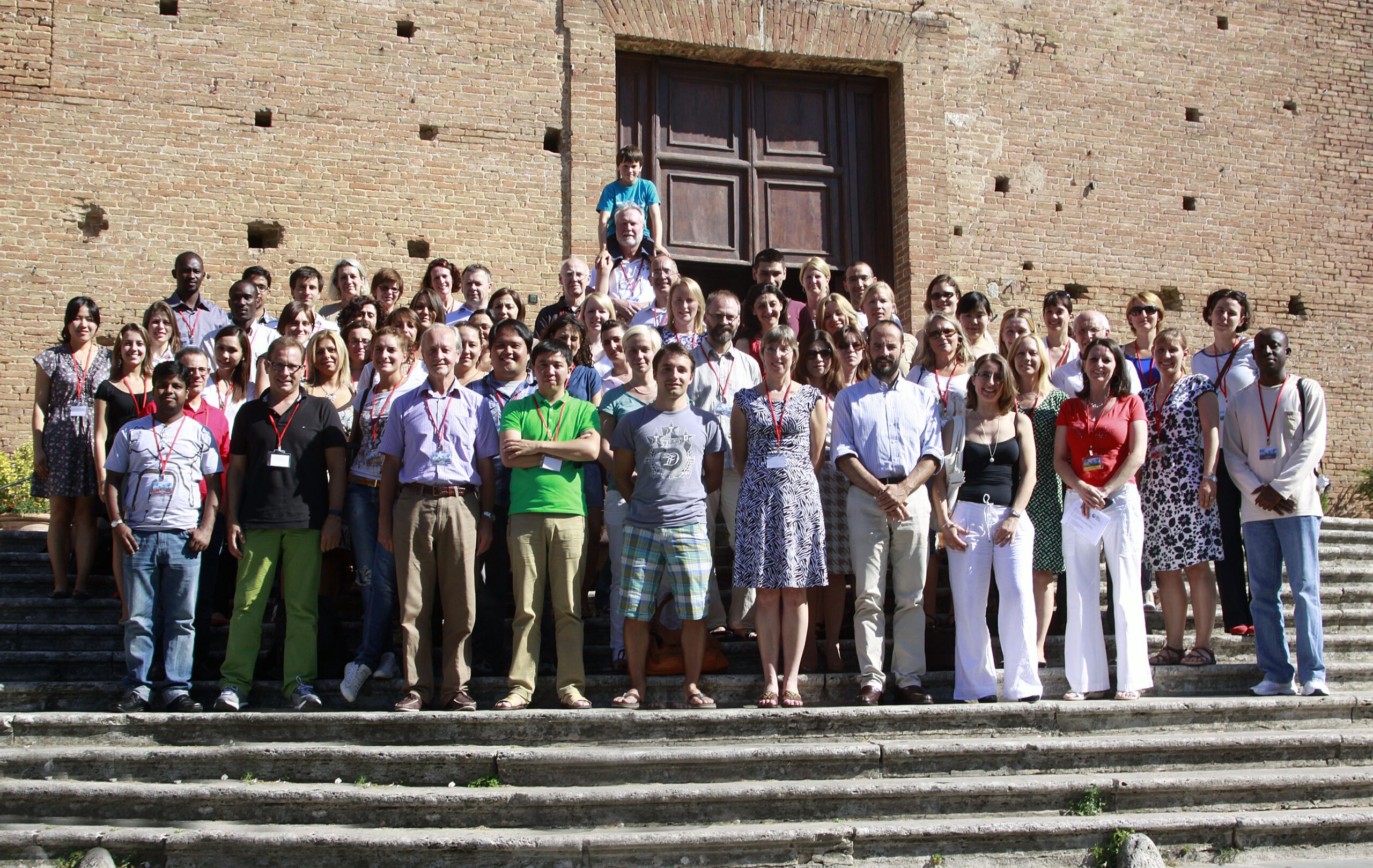
ISRV Schools bring together early-career researchers from around the world to learn from leading experts, build global networks, and develop the skills needed to tackle current and future respiratory virus challenges.
ISRV delivers two complementary formats designed to support early-career researchers at different stages of their development.
| Schools of Respiratory Viruses (5 days) | Mini-Schools (1-3 days) |
|
|
Both formats provide a place where early-career researchers can come together to learn, connect, and expand their knowledge of respiratory viruses.
“The School helped me to understand many concepts and techniques that I was unaware of. All the classes were excellent and well understood.” – Early-Career Researcher
ISRV Schools are designed to support both scientific development and long-term career progression, by building:

Build understanding across virology, immunology, epidemiology, clinical science, and public health.

Learn to interpret complex data and address real-world challenges.

Develop confidence presenting and discussing your work.

Connect with peers and leading experts from around the world.

Gain advice, mentorship, and exposure to different career pathways.
“Every session was very informative, along with the co-ordination of activities. The faculty were all very approachable.” – Early-Career Researcher
ISRV Schools and Mini-Schools have been delivered across multiple regions, supporting early-career researchers worldwide.
Previous Schools include:
Previous Mini-Schools include:
Take a look at our upcoming Schools and Mini-Schools via the event listings above.

“I had a chance to interact and discuss with diverse group of people over world.” – Early-Career Researcher
ISRV Schools are specifically designed to create inclusive, supportive environments for early-career researchers (ECRs).
This includes:
Find out more about support for ECRs here.

“We learnt a lot from the School, and it was a privilege to meet the people from different regions.” – Early-Career Researcher
ISRV Schools and Mini-Schools are designed to be accessible to early-career researchers globally.
Our goal is to minimise barriers to participation and support a globally representative research community.
Click here to find out if your country is classed as an LMIC, according to the World Bank.
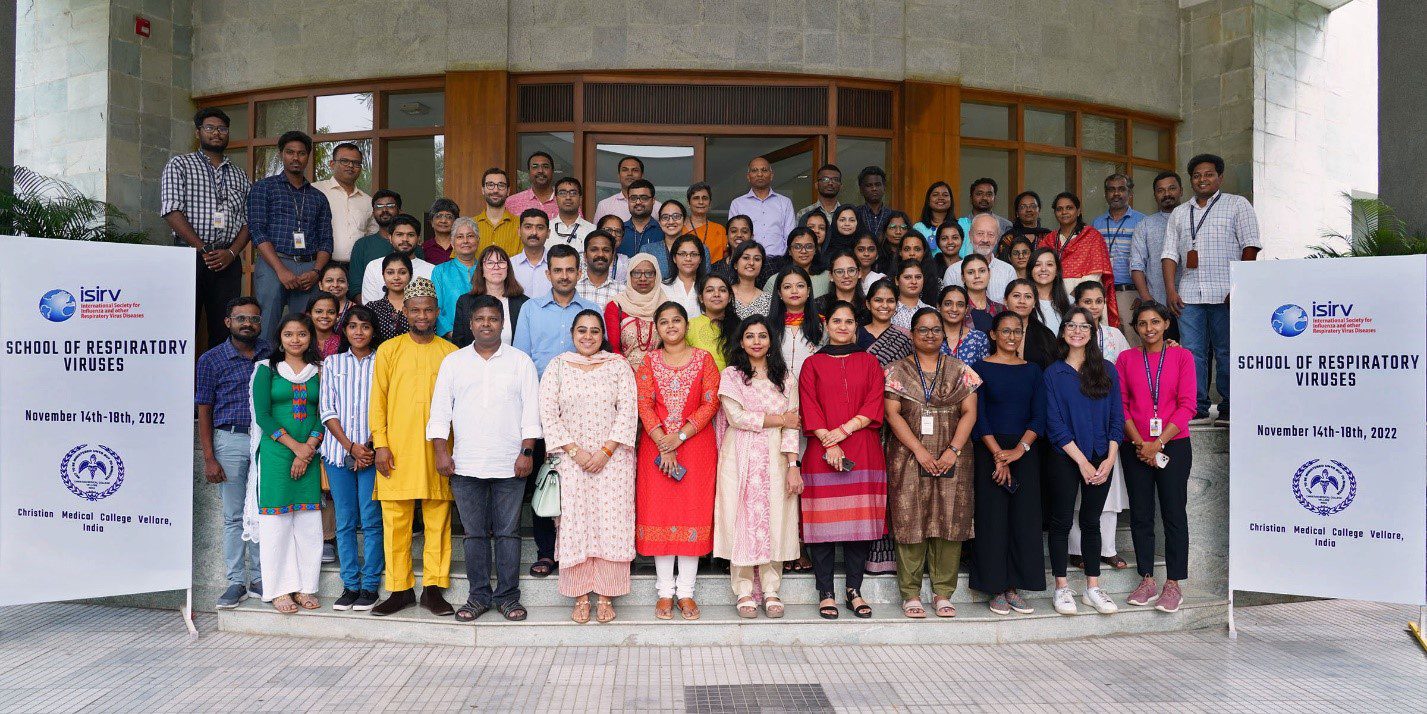
Join an upcoming ISRV School of Respiratory Viruses or Mini-School and connect with a global community of early-career researchers and experts. Click Read More on any of the upcoming Schools to find out more information and to register your interest. You can also find out more about previous Schools, such as reading the reports and viewing the School program, by clicking on Past Event Schools.
Featured Event

Featured Event

Schools
12 October 2026 - 16 October 2026
School of Public Health, The University of Hong Kong, Hong Kong
Read MoreFeatured Event

Forthcoming Event

Schools
23 September 2026 - 25 September 2026
Dakar, Senegal
Read MorePast Event

Schools
19 January 2025 - 23 January 2025
Doha, Qatar
Read MorePast Event

Schools
16 April 2022 - 20 April 2022
University of Siena, Italy
Read MorePast Event

Schools
14 November 2018 - 18 November 2018
Vellore, India
Read MorePast Event

Schools
7 May 2018 - 11 May 2018
American University of Beirut, Lebanon
Read MorePast Event

Schools
11 April 2016 - 11 April 2016
University of Siena, Italy
Read MorePast Event

Schools
1 August 2011 - 5 August 2011
University of Siena, Italy
Read MoreWhat is a School of Respiratory Viruses?
A School was originally defined as ‘a place where people are learning or meeting to learn’. ISRV Schools are no exception, bringing together early-career researchers at a wide range of international institutions to receive specialist tutelage from respiratory virus experts. School events are usually held in partnership with premier universities in different locations around the globe. The event is themed around particular individual viruses such as influenza, RSV, SARS-CoV-2 or MERS, or perhaps more broadly across the range of respiratory viruses generally. Our Schools aim to provide a memorable and uplifting educational experience for postgraduate or young researchers at the beginning of their scientific careers creating a supportive network for future career development.
Why does ISRV run Schools?
Helping to develop the next generation of respiratory virus scientists and researchers is an important activity for ISRV. As a professional society, our mission is to provide a forum for international scientists from government, academia and the private sector to exchange information, stimulate collaboration and provide education for promotion, prevention, detection, treatment and control of respiratory virus diseases globally.
Founding members of ISRV in 2005 realised the importance of investing in those entering the field, and the continued support for educating early-career researchers has remained a core aspect of the society’s remit.
What is the format of an ISRV School?
A School may take the format of a 4 to 5 day course with accommodation provided for the duration of the School, or 1-3 day ‘Mini-School’ held just before a major ISRV conference event, such as Options for the Control of Influenza (OPTIONS).
Schools provide a mixture of diverse activities (lectures, scenarios, lab visits, practical exercises, social activities), with opportunity for in-depth discussions and networking in a relaxed setting.
Mini-Schools comprise a series of lectures from prominent speakers at the upcoming conference. The talks are pitched to provide attendees with a simplified overview of the upcoming meeting, enabling understanding of critical context behind new discoveries.
What types of activities can I expect at an ISRV School?
At every ISRV School, we try and ensure a blend of activities ranging from ice breaker sessions to get over those awkward early shy moments, to wide ranging panel discussions, debates, group work on scenarios, data handling exercises and quizzes, as well as traditional lectures and gaining rapporteur experience. We aim to generate a spirit of open interactions, which lead to lively debates during panel discussions helping to build confidence.
In a Mini-School, time is much more limited due to the proximity of the main ISRV meeting. We aim to have engaging lectures which illuminate the cutting-edge science that will be held in the main conference, effectively getting attendees ‘up to speed’ on the important information they need to know. Mini-Schools are often accompanied by an ECR social event.
Who is part of the faculty at an ISRV School?
Faculty is made up from senior academics and scientists at the forefront of their field, selected for their excellent communication skills and commitment to educating the next generation. Faculty give generously of their time to provide engaging and stimulating talks to help attendees understand complex areas of science ahead of the main conference, or as part of a School.
Who should attend an ISRV School?
Schools are targeted at those early in their career, completing a higher degree or graduate training programme, or perhaps newly entering the field of respiratory viruses. They are intended to provide a digest of the most recent research findings across a range of disciplines, to provide context for those new to the field or early in their chosen career pathways.
You can read more about what ISRV classify as early-career researchers (ECRs) here.
How might attendance at a School benefit my career?
In lots of ways! Making connections with others at a similar stage of their career is incredibly valuable and will provide networking opportunities which could generate life-long professional connections. Being able to engage with senior scientists and quiz them about their career pathways and choices in a relaxed setting can bring amazing insights about career progression which helps to bolster confidence. Having the opportunity to do both of these things whilst gaining subject matter knowledge is an unparalleled bonus!
What support is available?
The Schools provide a low-cost education opportunity for early career researchers. Participants from low and middle income countries (LMICs) can apply for a scholarship to attend the School free-of-charge as well as for support with travel costs.
This support is possible thanks to funding from Flu Lab.
Click here to find out if your country is classed as an LMIC, according to the World Bank.
How can I apply for support?
Each ISRV School or Mini-School will release information on how to apply for support for each event when registration or Expressions of Interest applications open. Applications are then reviewed by the School organising committee. Check each School or Mini-School event page for further details.
Do I need to be an ISRV member to attend a School or Mini-School?
You will receive complementary ISRV membership as part of an ISRV School registration. You don’t need to be an ISRV member to attend a Mini-School, however ISRV membership will give you a discounted ticket rate for the main meeting the Mini-School is attached to.
ISRV membership may also provide access to discounted rates, priority opportunities or additional ECR activities.
 The ISRV Education Program is supported by Flu Lab. This funding enables the global expansion of ISRV’s education activities, including our Schools of Respiratory Viruses, Mini-Schools aligned with major scientific meetings, development of digital learning resources, and provision of scholarships to support early-career researchers. |