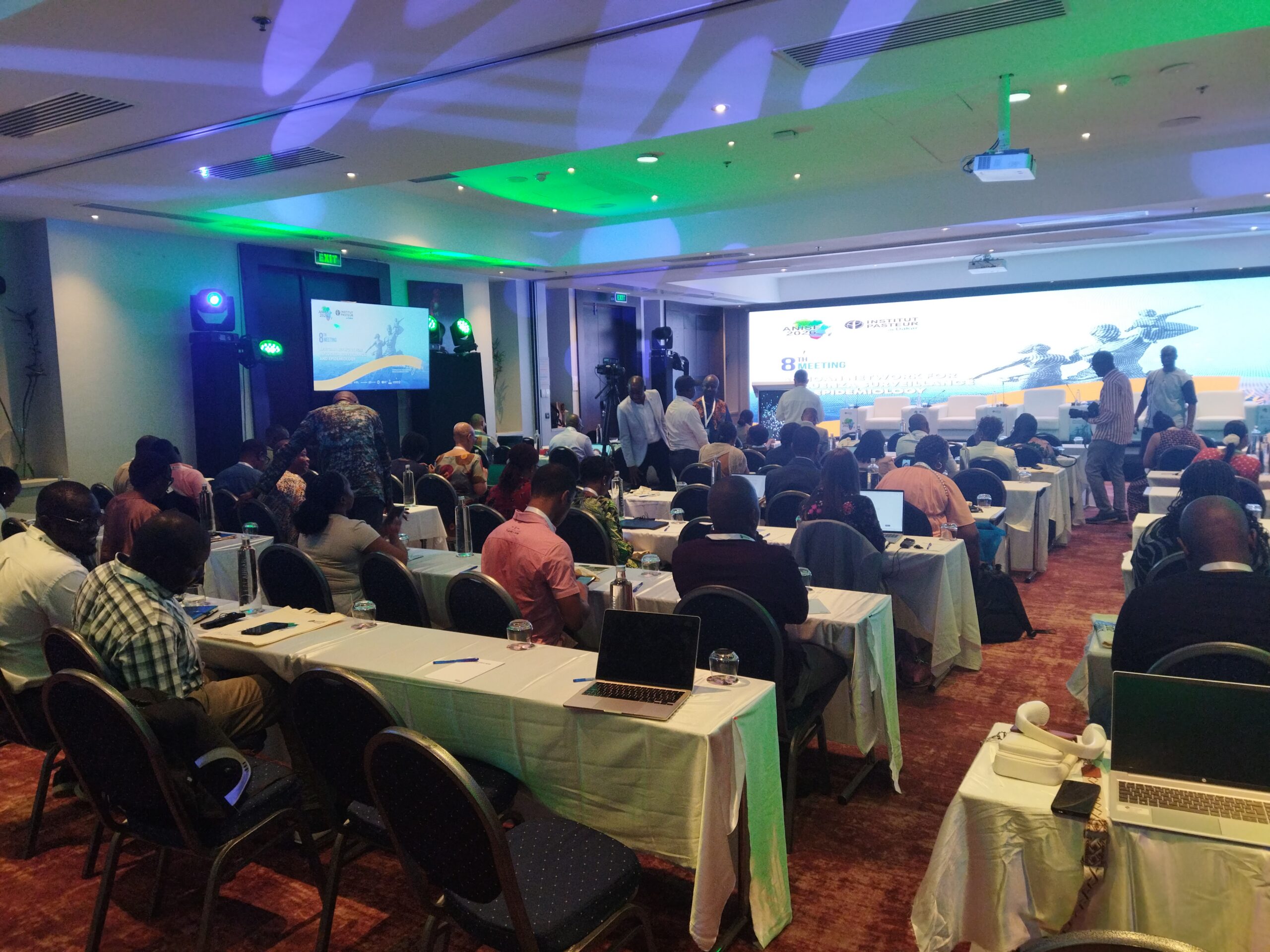
In September, ISRV joined colleagues from across Africa and beyond in Dakar, Senegal, for the first-ever ANISE Mini-School of Respiratory Viruses, a day that brought together early-career researchers and professionals for learning, conversation, and new connections before the 8th ANISE Annual Meeting.
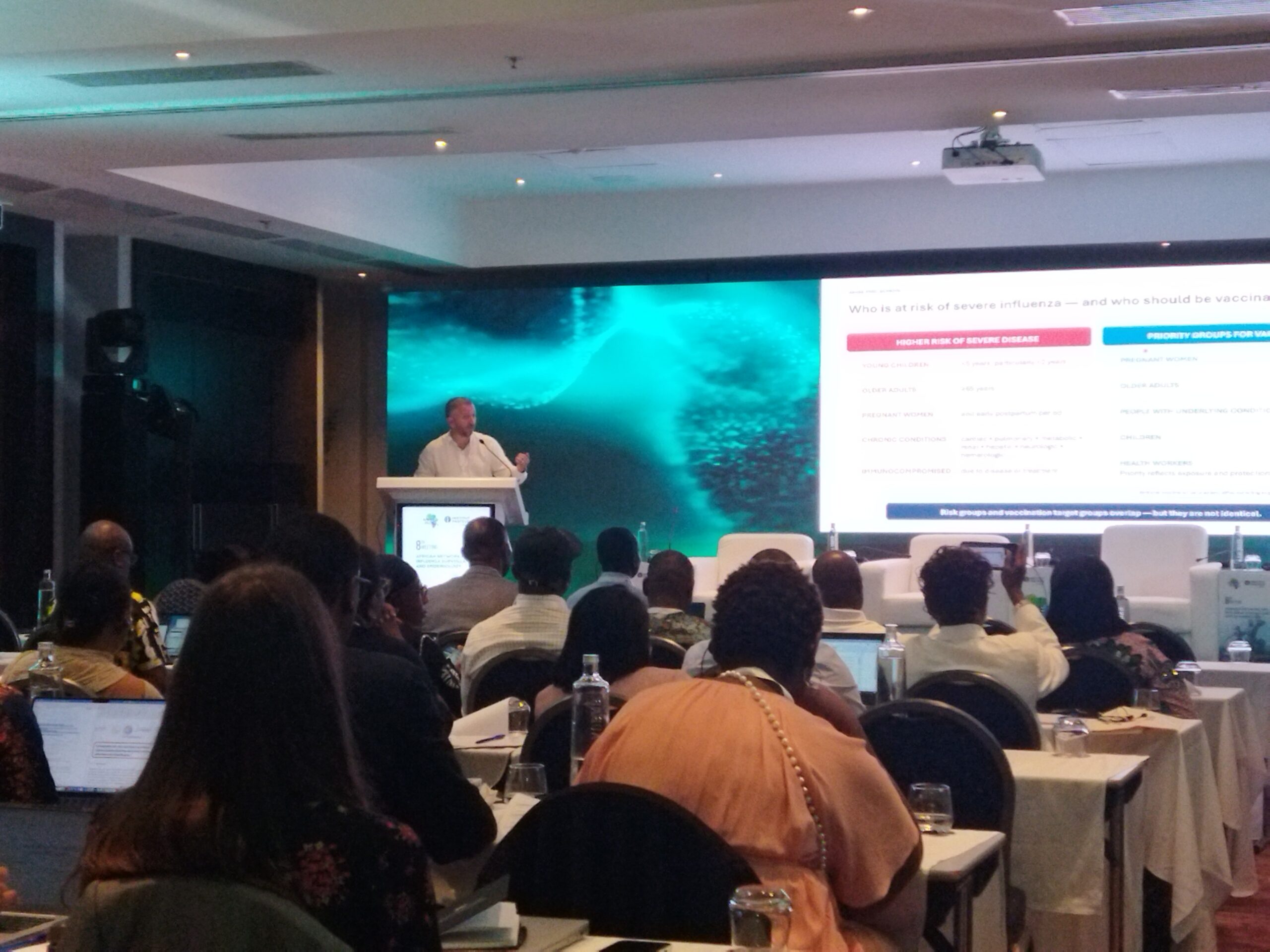
Jean-Michel Heraud speaking at the Mini-School
The Mini-School was designed as a broad journey through the respiratory virus field. Across the day, faculty explored everything from the global impact of respiratory viruses and One Health to influenza, RSV and SARS-CoV-2, genomic surveillance, vaccines and antivirals, translating evidence into recommendations, and the future of next-generation vaccines.
For participants working within individual areas of this huge field, it was also an opportunity to look beyond their own specialties and see how the pieces fit together. One participant perhaps summed up that experience best: “I learned how much I didn’t know.”
And that was exactly what we hoped the Mini-School would create: a space where participants could encounter new ideas, ask questions, make connections between disciplines, and head into the wider ANISE meeting with a broader view of respiratory virus research.
The appetite for that opportunity was clear. Demand exceeded the originally planned cohort, with additional delegates from the ANISE meeting joining the Mini-School and around 100 participants and faculty ultimately taking part. With simultaneous interpretation between English and French available throughout the program, the day also provided an inclusive environment for scientific exchange across a multilingual audience.
More than a day of lectures
Some of the most encouraging reflections came from participants describing what the experience meant for their own development.
One early-career researcher reflected:
“The experience has increased my confidence as an emerging researcher and strengthened my motivation to contribute to respiratory-virus surveillance and research in Cameroon and Africa.”
Others were already thinking about how they could take what they had learned back into their work. A participant involved in an Influenza and RSV Burden of Disease study in Ghana told us:
“The knowledge and perspectives gained will strengthen my contribution… particularly in generating and interpreting evidence that can inform future vaccine policy, introduction and evaluation in the country.”
There were practical connections too. One participant from Malawi met a WHO expert during the event and was able to seek guidance on FluNet and FluID, with potential relevance to influenza, RSV and SARS-CoV-2 surveillance reporting back home. It was a great example of why bringing people together matters just as much as the formal teaching program.
Opening doors to international scientific exchange
Widening access to opportunities like these is an important part of the ISRV Education Program. ISRV provided travel and accommodation scholarships for nine researchers to attend both the Mini-School and the wider ANISE meeting.
For one of our ISRV Travel Scholars, the experience was a particularly significant milestone:
“This was my first international scientific experience, and it was truly meaningful to me both personally and professionally.”
Alongside learning directly from experts, the scholar was able to present their own research and connect with researchers and other early-career scientists from different backgrounds, leaving Dakar with new knowledge, greater confidence, and an expanded professional network.
A collaborative effort
The Mini-School was made possible through collaboration. ANISE led the organization alongside its wider Annual Meeting, with ISRV helping to shape the scientific program and supporting both delivery and access. The wider meeting and participation were also supported by the Gates Foundation and The Task Force for Global Health.
Perhaps the best indication of the day’s success was what participants wanted to do next: take new ideas back into their research and professional practice, explore unfamiliar topics further, stay in touch with people they had met, and take part in future ISRV education activities.
For us, Dakar was a wonderful reminder that a Mini-School doesn’t need to be long to create meaningful connections. One day can open up a new area of
Read more