






Shaping the future of ISRV Education

Education Committee

The ISRV Education Committee provides strategic leadership and oversight of the Society’s growing Education Programme.

Bringing together expertise from across the international respiratory virus community, the Committee helps ensure that ISRV’s educational activities are high-quality, relevant, accessible and responsive to the needs of our global community.

The Committee works closely with the ISRV Education Team, wider ISRV leadership, Special Interest Groups and members of our community to shape the long-term direction of education and professional development across the Society.

What does the Education Committee do?

The Education Committee helps shape the strategy and development of ISRV Education, providing oversight across a growing portfolio of activities including:

  • Schools and Mini-Schools
  • Online and digital learning
  • Early Career Researcher development
  • Mentoring, networking and leadership opportunities
  • Scholarships and educational support
  • Masterclasses and other educational events
  • Educational partnerships and collaborations
  • New initiatives responding to the changing needs of the respiratory virus community

The Committee also reviews the reach, quality and impact of our activities, using participant feedback and evaluation to help ISRV continually improve its Education Programme.

Our Priorities

Our aim is to build an Education Programme that strengthens knowledge, develops people and connects the international respiratory virus community.

In guiding the programme, the Education Committee is committed to:

Who is on the Education Committee?

The Education Committee brings together members with a range of scientific, educational and professional experience from across the global respiratory virus community.

We aim to reflect different geographical regions, disciplines, sectors and career stages. Early Career Researchers are represented as full members of the Committee, helping ensure ECR perspectives are included directly in the development and governance of ISRV Education.

Education Committee Members

open arrow

Cheryl Cohen

Cheryl Cohen

Cheryl Cohen is Professor in epidemiology at the University of the Witwatersrand and heads the Centre for Respiratory Disease and Meningitis at the National Institute for Communicable Diseases in South Africa. She leads a team responsible for national surveillance and generation of evidence to guide policy for control of respiratory diseases and meningitis for South Africa. Her research focuses on key pathogens such as influenza, respiratory syncytial virus (RSV), SARS-CoV-2 and pneumococcus, among others. Key research areas include burden of disease, transmission, risk groups for severe illness and assessment of the impact and effectiveness of interventions, such as vaccination. She is a member of several national and international advisory committees and working groups mainly related to influenza, SARS-CoV-2 and other respiratory diseases. She was awarded a South African Medical Research Council, Gold Medal for Excellence in Research in 2024.

open arrow

Rebecca Cox

Chair of the Education Committee

Rebecca Cox

Chair of the Education Committee

Rebecca Jane Cox is a Professor of Medical Virology and Head of the Influenza Centre at the University of Bergen and Haukeland University Hospital in Norway, where she leads a team of 18 scientists. She completed her PhD in 1995 at the London Hospital Medical College, University of London, UK, followed by postdoctoral positions at Guy’s Hospital, UK, and the University of Bergen. With over 30 years of experience, Rebecca has played a leading role in international collaborative research on influenza and emerging pathogens. Her work focuses on vaccine development and evaluation, translational immunology, correlates of protection, and pandemic preparedness, with particular emphasis on human clinical trials and cohort studies. She holds advisory roles with major international health organizations, including the WHO, EU, and the European Medicines Agency. Rebecca is also a trustee of the ISRV and serves as Chair of its Education Committee, where she is passionate about training the next generation of scientists. She is also a Senior Editor for the journal Influenza and Other Respiratory Viruses, has authored more than 180 peer-reviewed publications, and regularly contributes to public discussions on respiratory viruses and vaccines through various media platforms.

open arrow

Bala Goundappa

Bala Goundappa

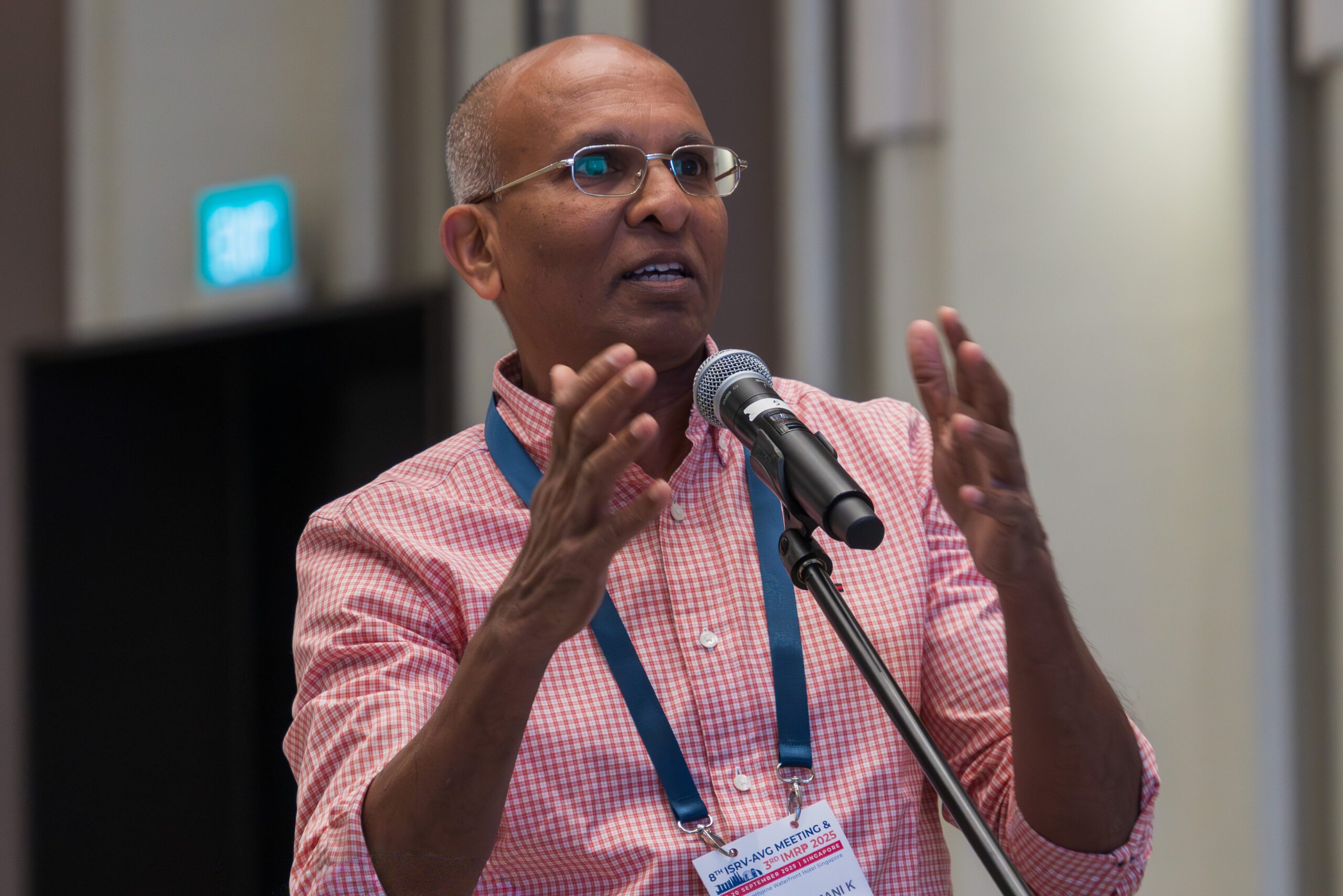
Balasubramani Goundappa is a Research Professor of Epidemiology and Clinical and Translational Science at the University of Pittsburgh. His work centers on statistical and epidemiological analysis of data from large, multicenter clinical trials. He develops study designs, guides data management and analysis, and creates efficient methodologies for epidemiological research addressing major public health challenges.

Much of his current work focuses on estimating influenza vaccine effectiveness and evaluating influenza vaccines. He also coordinates a multicenter trial investigating treatments for glaucoma and serves as co investigator for data management and analysis for the CDC’s US Influenza Vaccine Effectiveness Network. His collaborations extend across disciplines, including partnerships with Family Medicine investigators that have led to successful grants from Merck, Sanofi, and AstraZeneca. These projects support research on respiratory syncytial virus (RSV), influenza vaccine effectiveness, and human metapneumovirus (hMPV).

Through the US Flu VE Network, his findings have contributed to global influenza vaccine policy. Since joining the Epidemiology Data Center (EDC) in 2001, he has participated in numerous collaborative studies that have strengthened the impact of this work on public health. Over the past two decades, these efforts have resulted in 163 peer reviewed publications, reflecting his commitment to advancing epidemiological science.

Looking ahead, he aims to address emerging challenges in vaccine effectiveness, including waning immunity, the impact of mRNA vaccines, and the influence of viral evolution. He also plans to investigate treatment modalities in the COAST study related to Selective Laser Trabeculoplasty (SLT). A central part of his mission is mentoring the next generation of scientists by equipping them with advanced statistical skills, strong data interpretation abilities, and effective communication strategies to prepare them for leadership roles.

open arrow

Nzisa Liku

Nzisa Liku

Nzisa Liku is a public health specialist working at the U.S. CDC, Nairobi, Kenya. Her main focus is on respiratory disease surveillance and research in Kenya and the East Africa region in general, with the aim of generating evidence to support policy decisions by Ministries of Health. She holds a Bachelor’s degree in Medicine and Surgery from University of Nairobi, Kenya and a Master’s degree in Public Health from Edinburgh University, Scotland.

With particular interest in Health Information Systems (HIS), she has worked to support the design, development and implementation of various health information systems for routine data collection, surveillance and outbreak response. Her primary goals include championing digital health in respiratory viral surveillance, enhancing collaborative research opportunities and improving the dissemination of research findings from low- and middle-income countries.

open arrow

Asunción Mejias

Asunción Mejias

Asunción Mejías is Professor of Pediatrics and Medical Director of Clinical Research at the Department of Infectious Diseases at St Jude Children’s Research Hospital in Memphis, TN USA. For the past 25 years Dr. Mejías has been studying the pathogenesis of respiratory viral infections in infants and young children, with special emphasis on respiratory syncytial virus (RSV).  She has contributed with more than 300 publications including original articles, reviews, editorials and book chapters. She serves as external reviewer for several medical journals as well as professional organizations including NIH, the CDC or Welcome Trust, among others. She is also an active member of national and international professional organizations, holding different leadership positions. These include roles on the Council for the Society for Pediatric Research (SPR), Board of Directors of the Pediatric Infectious Diseases Society, and currently serve as President of the International RSV society (iRSVs).

open arrow

Emanuele Montomoli

Emanuele Montomoli

Emanuele Montomoli was born on 26 September 1968 in Siena, Italy. He graduated in 1988 from the Technical School in Siena as an expert industrial chemist. He graduated in 1997 in Human Biology discussing a thesis entitled “Optimisation of the use of MDCK cell cultures (Madin Darby canine kidney) for the epidemiological control of influenza”. In 2002 he graduated discussing his thesis entitled “Purification of haemagglutinin of the type B influenza virus through isoelectric focalisation”. In 1994 he was awarded a position assistant at the Hygiene Institute of the University of Siena. On 2 July 2002 he participated in a competition in the Procedure of Comparative Evaluation for a single posting as Associated University Professor, at the University of Turin, for the scientific sector MED/42 (General and Applied Hygiene). On 28 October 2002 he was appointed by the Faculty of Medicine and Surgery of the University of Siena.

During his studies he conducted research on epidemiological and microbiological field, particularly during the influenza season when he carries out the epidemiological and virological surveillance of the respiratory viruses circulating in Italy. Since 1994, he has carried out seroepidemiological research in order to evaluate the immune state of the population toward influenza viruses. Since 1995 he has mostly overseen clinical trials of influenza vaccines, in order to evaluate their immunogenicity and reactogenicity. Since 2002 he is the Head of Molecular Epidemiology Research Division at the University of Siena. He is the author of more than thirty articles with a total Impact Factor of 142, as well as numerous abstracts and letters, published in Italian and international scientific journals. In 2011 he was in the Organized Committee of the “Summer School on Influenza” in Italy. He has been a member of ISRV since 2005.

open arrow

Kirsty Short

Kirsty Short

Dr. Kirsty Short is an NHMRC research fellow and head of the viral pathogenesis lab at the School of Chemistry and Molecular Biosciences, The University of Queensland.

Dr. Short and her group focus on reducing the severity of emerging respiratory viral infections. Their group performs a large amount of research on the role of chronic metabolic conditions (namely diabetes and obesity) in severe viral infections. Their work also includes a focus on avian influenza (‘bird flu’) in the context of pandemic preparedness.

Their group also works with SARS-CoV-2 with a particular focus on the role of children in disease transmission, the development of novel therapies and reducing disease severity in patients living with diabetes and obesity.

open arrow

Sheena Sullivan

Sheena Sullivan

Sheena Sullivan is an infectious diseases epidemiologist with a PhD from UCLA (2011). Her work focusses on valid estimation of vaccine effectiveness and the underlying immunological mechanisms that influence it. From 2011-2023 she led the Epidemiology group at the at the WHO Collaborating Centre for Reference and Research on Influenza in Melbourne. There, she contributed to the strategic selection of influenza viruses to inform vaccine formulation updates, including assessment of influenza vaccine effectiveness (VE), and provided updates on influenza virological surveillance and VE to government, including Australia’s NITAG and in her role on the National Influenza Surveillance Committee. She has led or been co-investigator for several sero-epidemiological cohort studies to characterise responses to influenza infection and vaccination, with a special interest in how repeated vaccination harms antibody breadth.

She continues to work with the Australian Sentinel Practices Research Network (University of Adelaide) and Influenza Complications Alert Network (Monash University), to provide annual estimates of influenza, SARS-CoV-2 and RSV vaccine effectiveness for Australia. She has served on a number of WHO working groups and provides ongoing technical support to WHO member states for the estimation of influenza burden, and the effectiveness and impact of influenza vaccines. She has authored and co-authored nearly 200 publications in high impact journals such as Lancet Respiratory Medicine and NPJ Vaccines and has been awarded grants totalling >$6million.

Sheena has been a council member with ISRV since 2022. She is an Associate Editor for the Society’s journal, Influenza and Other Respiratory Viruses and was public health co-chair for the Scientific Organizing Committees for Options meetings in Belfast (2022) and Brisbane (2024). Sheena brings a unique perspective to Council having worked for many years as an epidemiologist in a WHO influenza reference laboratory where she gained a thorough understanding of both epidemiologic and virologic influenza surveillance, especially as it contributes to vaccine decision-making. Moreover, she brings diverse experience to the Council, having worked in academia and government, and consulted for industry and the WHO. She wishes to continue serving on Council to contribute to the strategic direction of the Society, including organization of the educational and conference activities it offers. Coming years will be particularly interesting as the Society broadens its scope to include other respiratory viruses and new vaccine enter the market.

open arrow

Mark Tompkins

Mark Tompkins

S. Mark Tompkins, Ph.D. is the Georgia Athletic Association Distinguished Professor in Virology and Immunology and Director of the Center for Vaccines and Immunology at the University of Georgia. He is also the Director and Principal Investigator of the Center for Influenza Disease and Emergence Research, a NIAID Center of Excellence in Influenza Research and Response (CEIRR) at the UGA. He received his doctorate in Immunology from Emory University. He then studied immune mechanisms of onset of autoimmune disease as a National Multiple Sclerosis Society Postdoctoral Fellow before joining the Center for Biologics Evaluation and Research at the FDA where he studied immunity elicited by influenza vaccination.

He joined the University of Georgia in 2005 and rose through the ranks to Professor in 2016. Mark was awarded a Senior Fulbright Scholar Award in 2012 and worked at the CSIRO ACDP in Geelong, Australia. Dr. Tompkins’s research and training programs focus on understanding the host response to emerging and re-emerging respiratory pathogens, pathogen-pathogen interactions, and vaccine-elicited immunity.

open arrow

Carolien van de Sandt

Carolien van de Sandt

Dr Carolien van de Sandt is a Senior Research Fellow in the Department of Microbiology and Immunology at the University of Melbourne at the Peter Doherty Institute. On September 1st, 2025, she will take up a new position as Team Leader at the Murdoch Children’s Research Institute (MCRI, Melbourne, Australia). Her principal area of expertise is in viral and aging immunology.

Carolien completed her PhD in 2016 at the Erasmus University in Rotterdam (Netherlands), where she investigated the longevity, cross-reactivity and immune evasion strategies of influenza virus-specific CD8+ T-cells, followed by two postdoctoral years. In 2018, she was awarded the prestigious European Marie Sklodowska-Curie Action (MSCA) Fellowship and the McKenzie Fellowship to join the Kedzierska laboratory, where she leads the Aging Immunity Research Program. Her research unravels the mechanisms that underly gain-and-loss-of virus-specific CD8+ T-cell function across human lifespan and in high-risk populations. During the pandemic (2020-2021), Carolien relocated to Sanquin (Netherlands), a condition of her MSCA Fellowship. There, she led an independent research team studying SARS-CoV-2 immunity in healthy and autoimmune patients. In 2022 she was awarded the ARC-DECRA Fellowship and the NHMRC Investigator EL2 Fellowship in 2025, to continue her Aging Immunity and T-cell Development Research at the University of Melbourne.

Carolien has 73 publications including in leading journals like Cell, Nature Medicine, Nature Immunology, Immunity and Nature Communications. The importance of her work has been recognized by 12 prestigious Awards including the ASI-Peter Doherty Medal (2024), the ESWI Claude Hannoun Prize for Best Body of Work (2023), the Viruses Early Career Investigator Award (2022) and in 2024 she was shortlisted for the Nature Inspiring Women: Scientific Achievement Award (2024). Her research was covered by >1000 media features and her contributions to public outreach were recognized by the AIPS-Young Tall Poppy Award (2023) and ASI-Public Engagement Award (2023).

Carolien was on the local organising committee of the Options XII conference for the control of Influenza in Brisbane in 2024. She played a pivotal role in organising an extensive program for early career researchers (ECRs) from social ‘get to know you’ pub quizzes to careers lunches. Carolien has continued her commitment to ECRs by joining the ISRV education committee.

Carolien successfully organised the first ECR events at the Options XII conference and has a strong passion for public outreach. As a result of this experience, she has recently joined the ISRV Education Committee, to continue engagement with ISRV and contribute to the community.

Carolien aspires to create events for ECRs that foster networking and professional development opportunities. Her initiatives aim to retain talented young researchers by setting them up for success, which will ultimately benefit the whole field.

open arrow

Sook-San Wong

Sook-San Wong

Dr. Wong is currently an Assistant Professor in the School of Public Health at the University of Hong Kong.

Previously, she was Professor of Virology at the State-Key Laboratory of Respiratory Diseases, at Guangzhou Medical University in China. She received her MSc from the University of Malaya, Malaysia and her PhD from the University of Melbourne, for her studies on dengue virus. She did her postdoctoral training on influenza viruses with Dr. Richard Webby at the WHO Collaborating Center on Influenza Ecology, at St. Jude Childrens’ Research Hospital. Her research interests have been on the intersection between viral evolution and host immunity and its impact on the population immunity. She has published over 40 peer-reviewed publications, including recent studies on COVID-19. Dr. Wong’s career has spanned a diverse research experience, enabling her to build a strong network across the world with scientists, epidemiologists, veterinarians and public health officials under the umbrella of global public health. She is an active advocate for scientific communication and community engagements and hopes to leverage her perspectives and research experience to promote scientific engagement particularly from developing countries in Asia.

Get involved with ISRV Education

You don’t need to be a member of the Education Committee to help shape and support ISRV Education.

We want to draw on the knowledge, experience and ideas of our international community, and there are many ways to contribute. Opportunities may include joining a working group, supporting the development of a particular initiative, contributing as a speaker or faculty member, becoming a mentor, sharing specialist expertise or helping us identify emerging educational needs.

We particularly welcome involvement from Early Career Researchers and members from different regions and professional backgrounds, helping ensure our Education Programme reflects the breadth of the global respiratory virus community.

Interested in getting involved?

Email us

Joining the Education Committee

Education Committee membership is periodically refreshed to bring together the mix of expertise, perspectives and experience needed to support the continued development of the Education Programme.

When opportunities to join the Committee become available, ISRV will normally invite expressions of interest from its membership. Applications are considered against the current needs and composition of the Committee, including expertise, geographical representation, career stage and diversity.

Keep an eye on ISRV communications for future opportunities to join the Education Committee.

Find out more

The Education Committee operates within Terms of Reference agreed by ISRV, setting out its role, membership and governance arrangements.

Have an idea for ISRV Education, or interested in contributing to our work?

Contact the Education team